Endurance athletes are a different breed, especially cyclists, who often find it harder to rest up than to crank out a hard set of intervals.
As tough as this may seem, it can hide behind a deeper issue of not taking recovery seriously, leading to poorer adaptations and slower/lower speed and power gains overall.
Far too many people I know train way too much, way too often, and potentially fail to extract the full benefits from their hard and diligent training.
It's not uncommon to see riders riding 6, sometimes even 7 days a week!
While I appreciate the work ethic, I firmly believe this makes you slower in the long run.
How?
To answer this, let's talk about how training and adaptation works. In extreme layman's terms: training doesn't make you faster or stronger. Rather, it induces stress. The body with time adapts to this stress.
What might have felt very hard at some point, for example, sustaining 30 kmph average for an hour or two, with time, as you do it more often and recover from it, the body adapts, making it easier.
These adaptations happen in numerous ways: improved oxygen delivery, better fractional utilization, better lactate clearance, improved capillarization and so on.
But the point is, these happen when you:
1. Induce a stress signal from training
2. Let the body adapt to that by recovering
Most people nail the first part, more often than not, overdo it (that's a topic for another day), but forget about the latter.
How do you determine if you're not recovering well from your training? What are the possible signs?
1. Your rest day from training = "Strength Session"
This is a very common and counterproductive practice. Most cyclists take a "rest day" and crank out squats, lunges, and whatnot on that day!
My argument is simple, if strength training is the rest day for you, you're not strength training right. It should challenge you, push you, make you work hard for any meaningful gains. And if it is challenging or hard, then it's not a rest day! You're just piling up fatigue on already tired legs.
Worth mentioning though, light stretching, mobility, maybe even some core or upper body work is acceptable on a rest day, but I'd still keep it mostly completely off because of the mental load aspect of training, meaning, I would not do hard and/or time intense core/upper body sessions on my rest days.
The Fix: REST UP. Sleep an extra hour or two, that's your training for the day! Plan and periodize your S&C sessions better throughout the week/season.
You can also try double sessions (combining endurance training with strength work) on certain days or even replace 1 day of riding with just S&C, depending upon where you are in the season and training experience.
2. You're taking just 1 off day a week.
Yes, this sounds a bit extreme, and it probably is.
But, in my experience, most people don't fare well with just 1 day off, provided they're doing a decent volume of training (this doesn't apply to those training sub 4-6 hours a week).
Because as mentioned, recovery is what drives adaptations, adaptations are what drives performance.
Athletes training/racing full time and for years might be fine with it but the average joe with professional, personal and other obligations should not try to mimic it.
More than physically, it also frees you up mentally to be able to give it your all in the other sessions. Worth mentioning though, just 1 day off a week is fine for short/overload phases but they need to be carefully managed and shouldn't be the staple for the average cyclist, all year round.
The fix: Try 2 days of rest/recovery. Maybe even 3, if you're starting out. Some of my best and my athletes' best power outputs have come from plans that prioritized 2-3 days of rest. See what works for you.
3. Your ego gets the better of you
I think at some point, all of us have been guilty of this.
You realize recovery is important.
You schedule and plan it nicely.
You decide, instead of a complete rest day, you'll do a recovery ride/run (which is fine).
But then?
You ride fast, or at a certain power that makes you feel "good" about your recovery ride, or at a running pace that'll make people look up to you because that's your (apparent) recovery pace!
This is extremely counterproductive. Going back to the S&C argument, your training should be either hard (to induce stress) or allow you to recover (to adapt from the stress). These "ego" recovery sessions do neither. Instead, they turn your recovery rides/runs into junk miles!
The Fix: Embrace that recovery rides/run are going to feel extremely easy, almost embarrassingly slow. You can push more, definitely, but that's not the point of these sessions. If I were to give a number for recovery rides, I'd say keep it below 40-50% FTP for sure, with LTHR below 60-65% (emphasis on below).
If you have a hard time going as slow/easy and you let the ego get the better of you, just take a complete rest day.
4. Your performance has stagnated. Resting HR, HRV and Performance Metrics are in the red.
If you've been stuck on the same FTP, the same power for certain intervals, the same average speed or whatever, it could indicate that you're chronically fatigued.
The solution in these cases is rarely more training, but better load management and recovery.
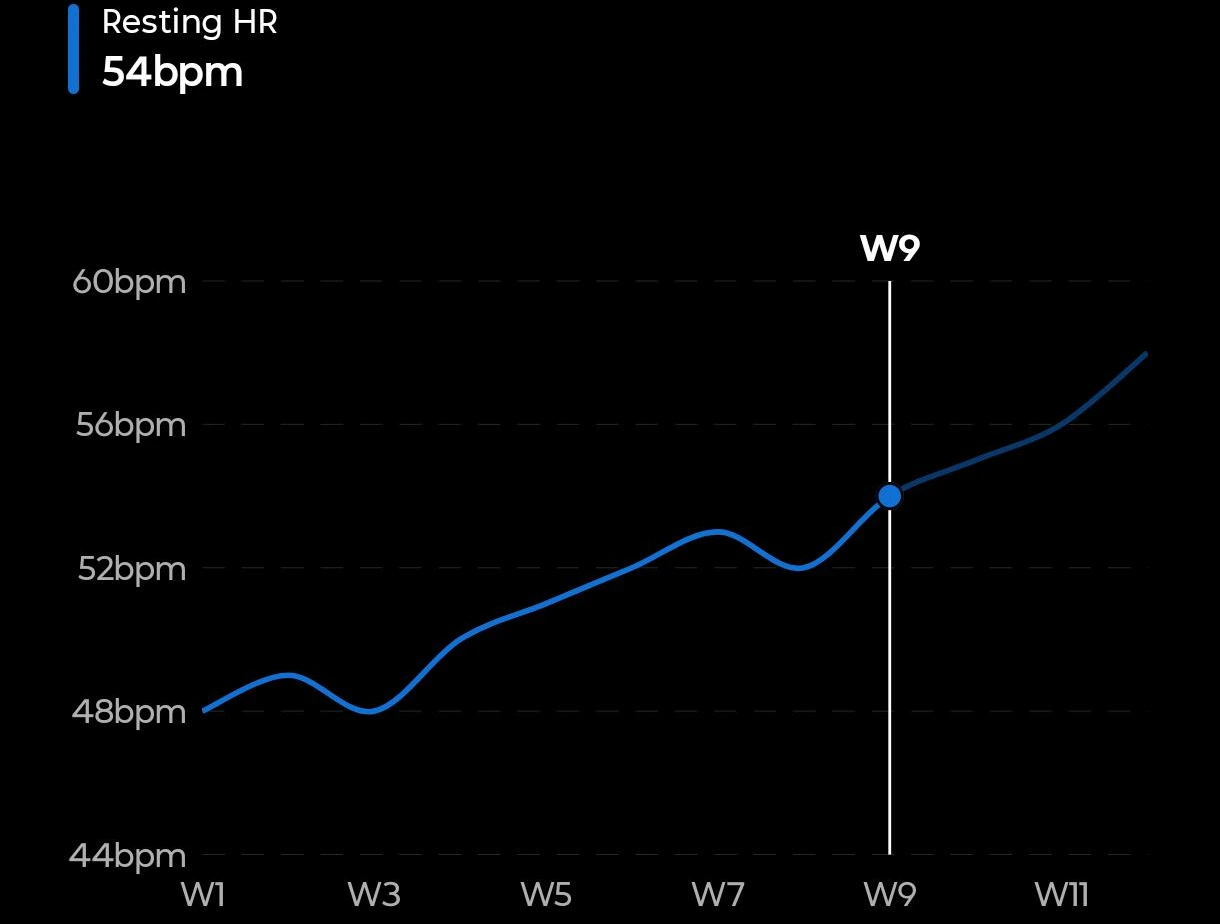
Similarly, if metrics such as Resting HR, HRV have deteriorated over time, it could hint the body needs some time off. For these, one must look at the weekly trend, rather than just a single day's reading.
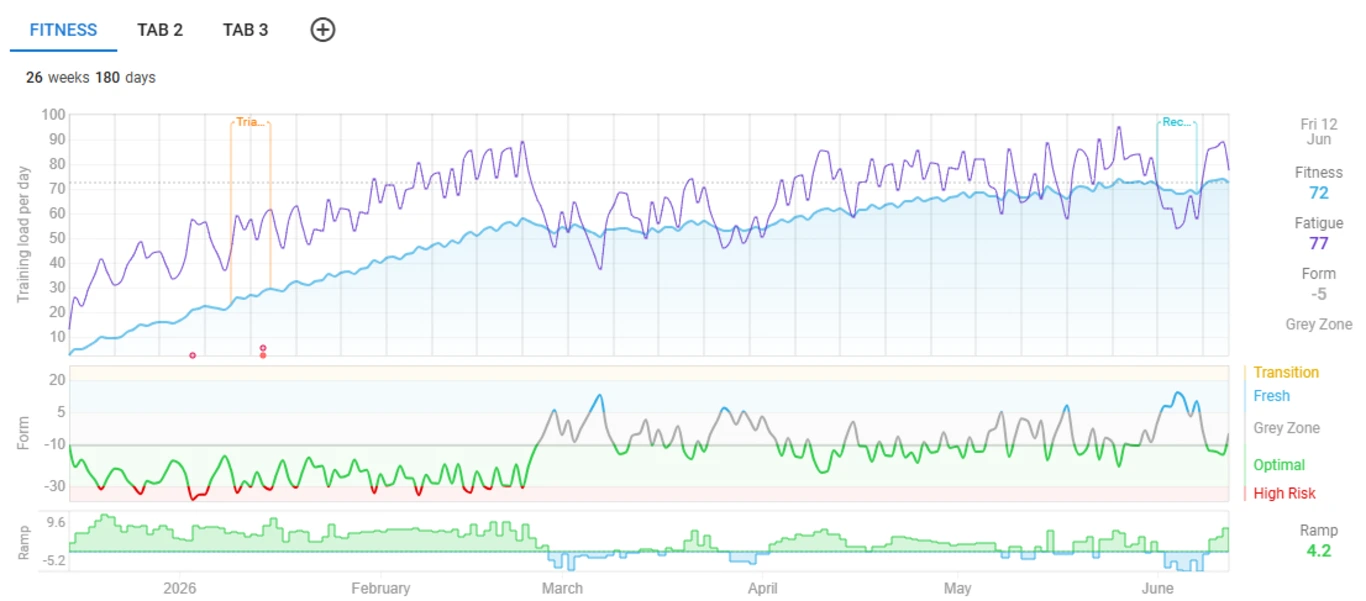
Other metrics such as Form/Readiness from Performance Management Chart (Fitness, Fatigue, Form) could also provide us meaningful insights. These metrics, however, must be considered as a suggestive guide and not be treated as primary factor for determining training load.
The Fix: Incorporate regular deload phases. Plan and structure your training better to keep an eye on metrics that help you quantify fatigue but also see how the body feels.
5. All your weeks look more or less the same
If you've been keeping it on the gas pedal for a long long time, doing the same volume, the same intensity, without any meaningful progression, it could suggest that you're not managing your recovery optimally (and/or the training is not hard enough).
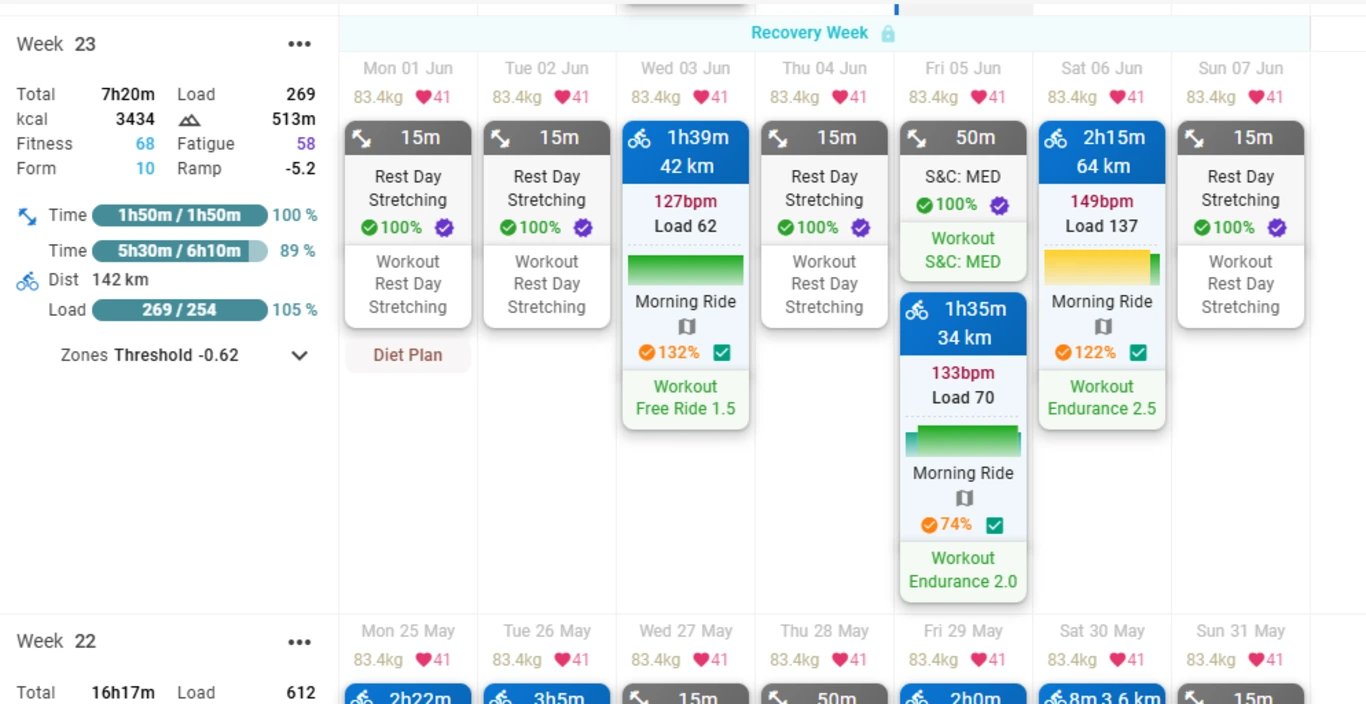
Every good training plan has a deload phase, taken once every 2 to 6-8 weeks (Yes, it's a huge range).
If you're not taking a recovery week once in a while and/or don't feel the need to, it could suggest that you're either not training hard enough or not respecting the recovery, both of which hamper performance.
The Fix: Incorporate a deload phase/recovery week once every 2-6 weeks. You'd want to reduce on the frequency, volume and intensity for this week. Generally, 40-50% of usual training volume is a good ballpark. Soak in the adaptations and prepare for the next block of training.
6. You don't feel like training
Yes, this is another nuanced hint. It especially applies to those athletes who are (mostly) highly motivated. If you're one of those who don't mind the work, and you've been feeling a bit under the weather, thinking you've gone lazy, think again!
Constant stress from training and/or lack of recovery not only takes a toll on you physiologically, it also breaks you mentally.
I've been guilty of this, where I thought I was not "as disciplined or as tough as before" but 8/10 times, it was rarely laziness, but rather a constant state of stress.
The fix: Listen to your body. Don't confuse fatigue with laziness.
I always say this, the mind lies, very often, but the body seldom does.
Conclusion
Recovery isn't the absence of training. Recovery is part of training.
The goal isn't to accumulate the most fatigue but to accumulate the most adaptation.
If you're constantly tired, sore, and forcing sessions, consider that the answer may not be more training. It may be more recovery.
As the old saying goes, "Train Hard. Recover Harder."